

Few wildlife encounters in the Galápagos Islands are as impressive as seeing the Waved Albatross in its natural habitat. With its enormous wingspan, elegant flight over the ocean, and famous courtship dance, this species is one of the most fascinating animals in the archipelago.
For travelers visiting the Galápagos, Española Island is the best place on Earth to see them. In fact, nearly the entire global population of this species returns to this island every year to breed.
If you are planning a trip to the Galápagos Islands, learning about these extraordinary birds will make your visit to Española even more memorable..
The Waved Albatross, scientifically known as Phoebastria irrorata, is one of the most unique seabirds in the world.
Scientific classification:
Scientific name: Phoebastria irrorata
Family: Diomedeidae
Order: Procellariiformes
Type: Pelagic seabird
This species is especially unique because it is the only tropical albatross in the world. Most other albatross species live in colder waters of the Southern Ocean.
Because of its limited range and unique ecological role, the Waved Albatross is considered one of the most remarkable seabirds in the Pacific Ocean.
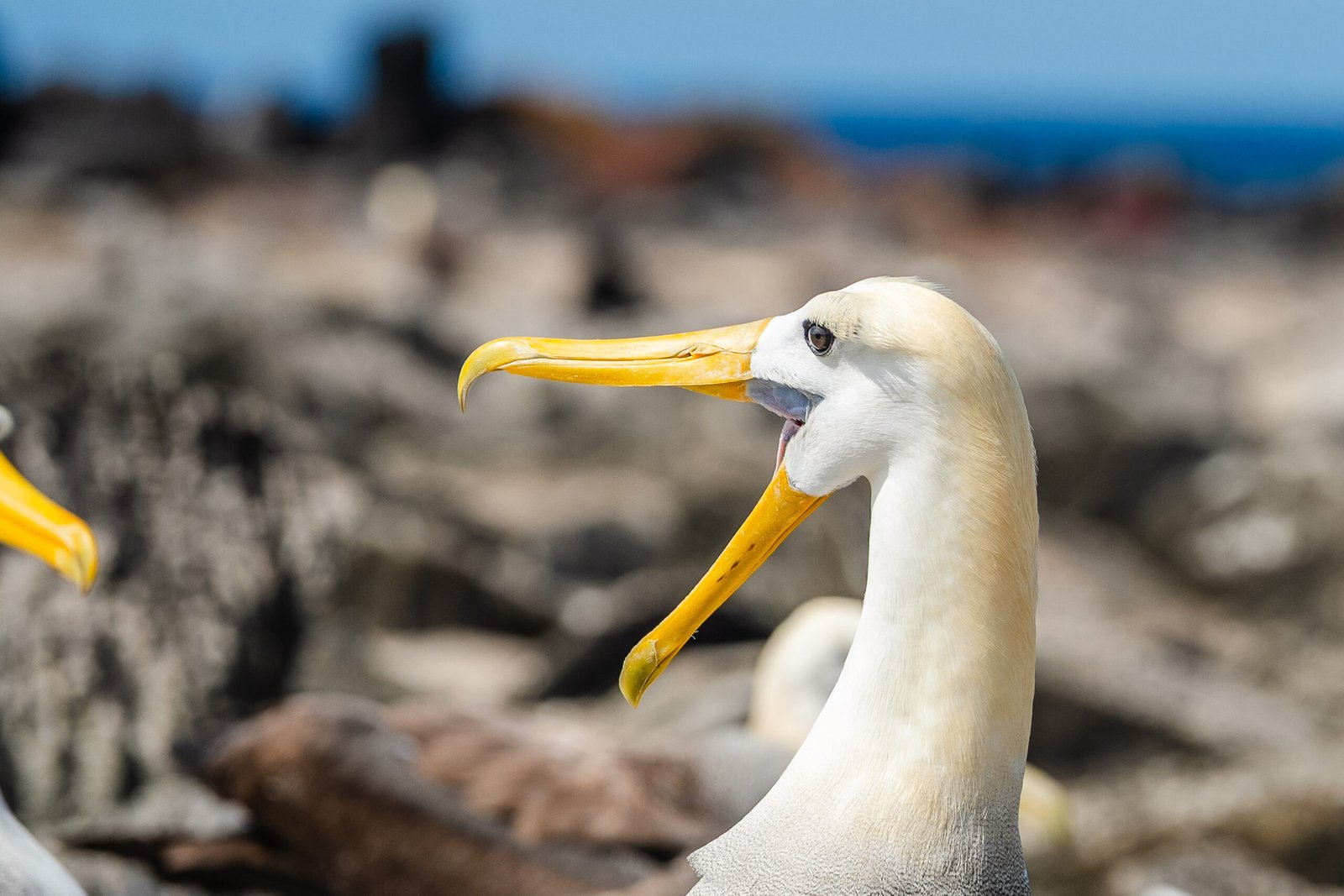
The Waved Albatross is the largest bird species found in the Galápagos Islands.
Key physical characteristics include:
Wingspan: up to 2.5 meters (over 8 feet)
Weight: approximately 3–4 kilograms
Body length: about 90 centimeters
Life expectancy: often over 40 years
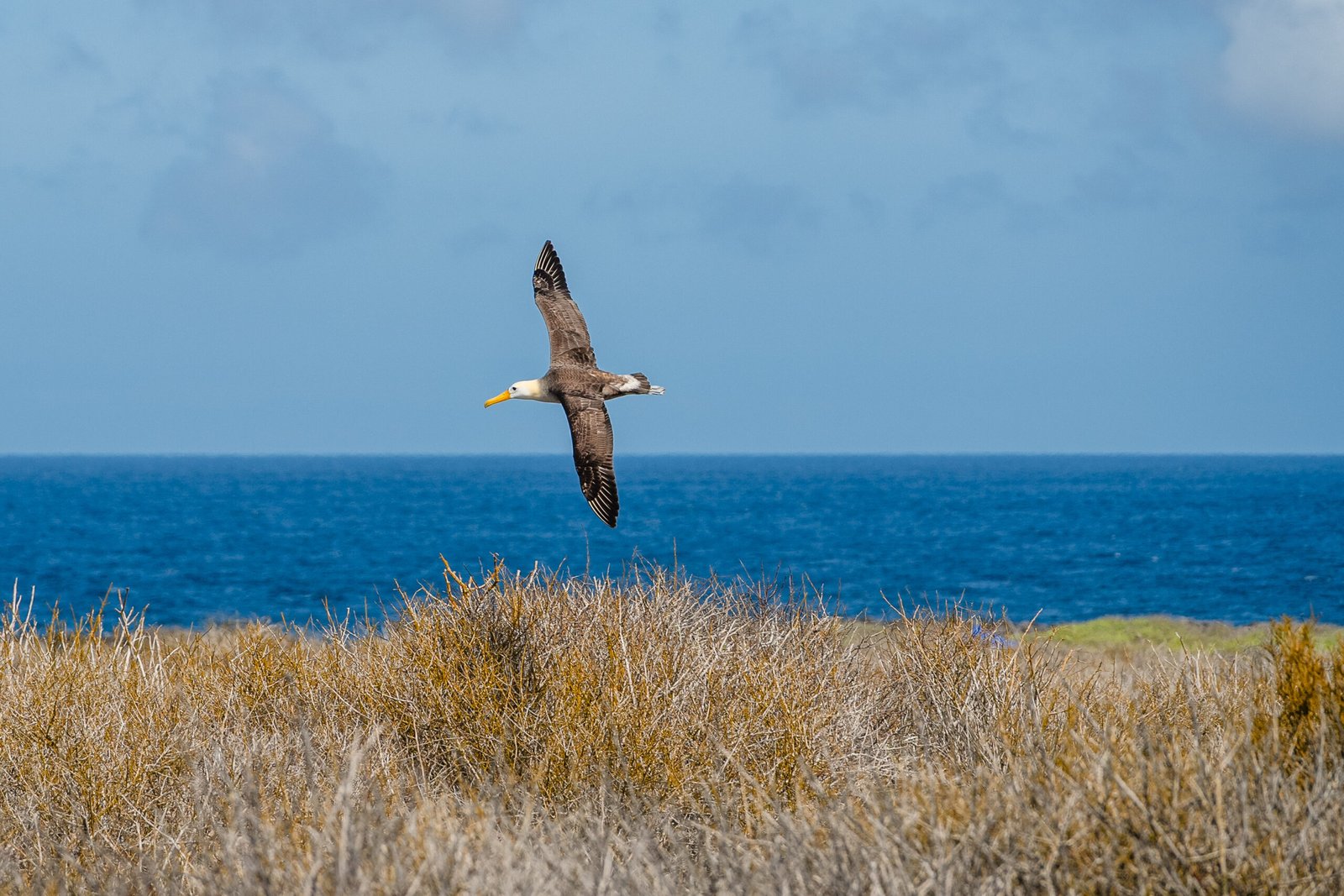
Their long, narrow wings are perfectly adapted for long-distance soaring over the open ocean.
Their strong, elongated yellow beak allows them to capture fish and squid from the ocean surface.
The name “Waved Albatross” comes from the subtle wave-like pattern on the feathers of their body.
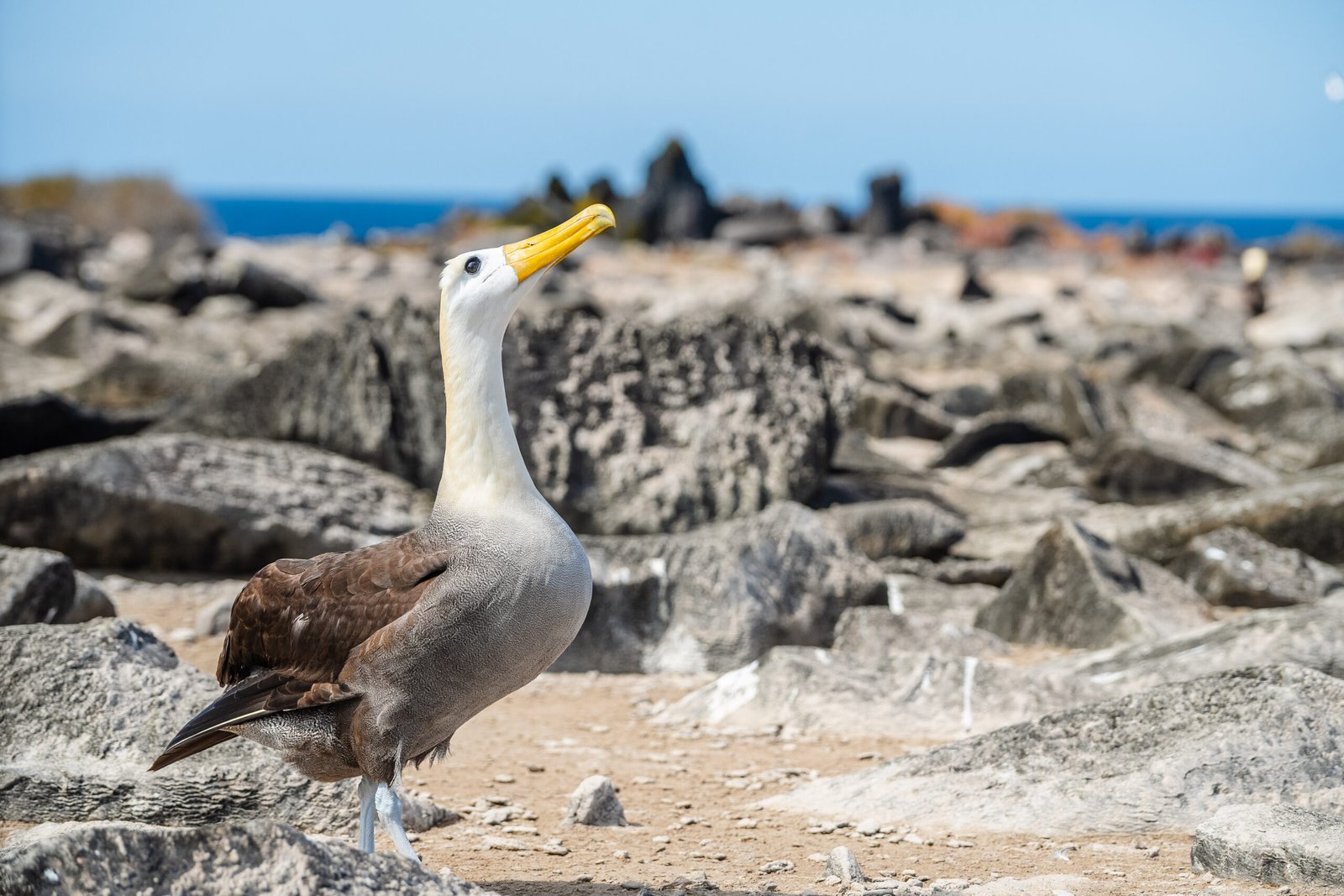
Unlike many seabirds, the Waved Albatross has a very restricted breeding distribution.
More than 99% of the world population breeds on Española Island in the Galápagos
During the breeding season, thousands of albatross gather on Española, particularly near coastal cliffs where wind currents help them take off easily.
This makes Española Island one of the most important seabird breeding sites in the world.
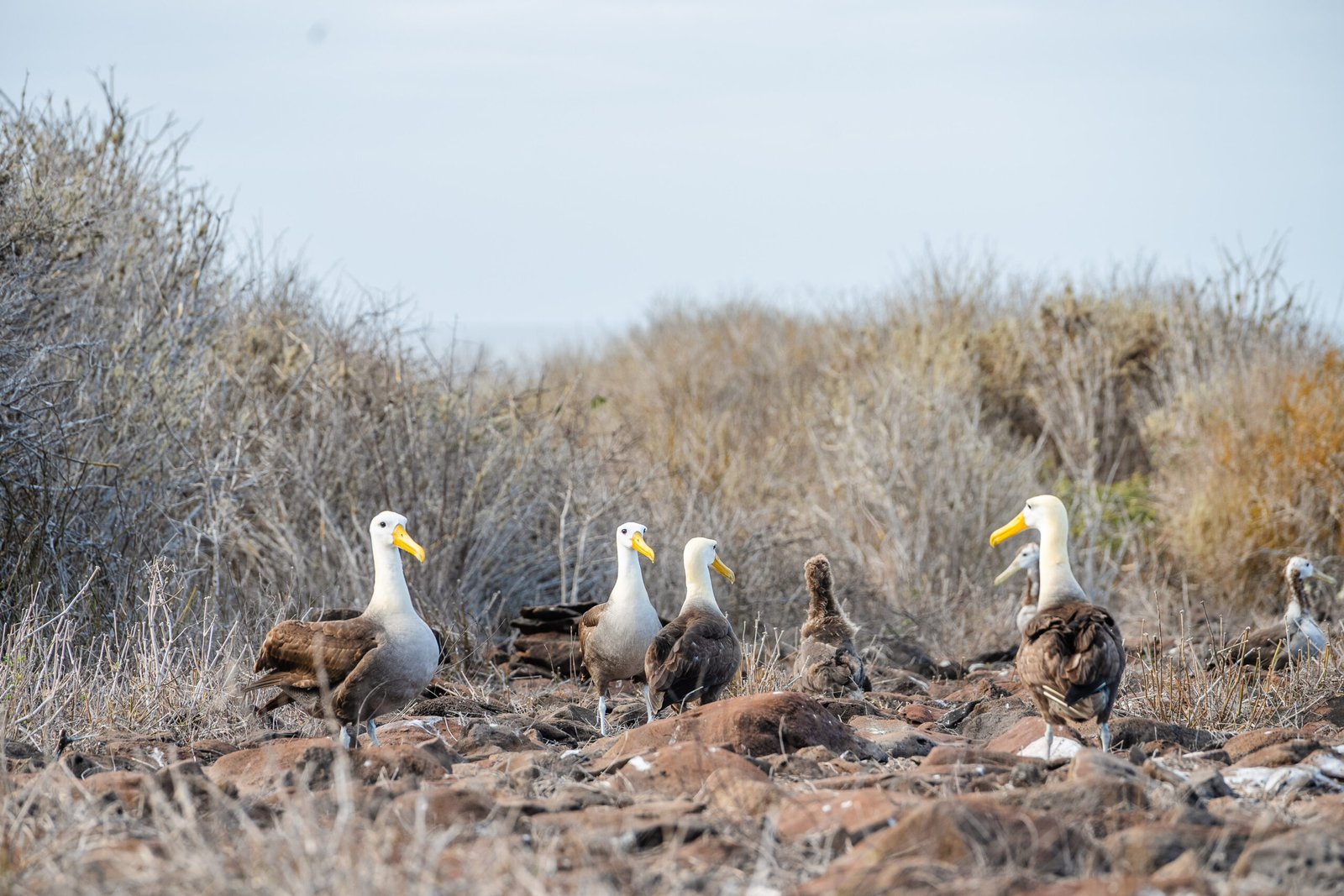
One of the most fascinating behaviors of the Waved Albatross is its elaborate courtship ritual.
Albatross are known for forming long-term pair bonds that may last for life. Each year when they return to Española Island, pairs perform an intricate dance to reaffirm their bond.
The courtship display includes:
Bill clapping
Head pointing toward the sky
Wing spreading
Circular walking around their partner
Vocal calls
This ritual helps partners recognize each other after spending months apart at sea.
Visitors lucky enough to see this display often witness dozens of dancing pairs across the colony at the same time.
Waved Albatrosses have one of the slowest reproductive cycles among birds.
Important scientific facts:
They lay only one egg per year
Both parents share incubation duties
The incubation period lasts approximately 65 days
The chick takes 5 to 6 months to fully develop
Because they reproduce so slowly, their population is particularly vulnerable to environmental changes and human impacts.
Waved Albatrosses are marine predators specialized in feeding at the ocean surface.
Their diet mainly consists of:
Squid
Small fish
Crustaceans
Occasionally floating fish remains
Adult birds may travel hundreds or even thousands of kilometers in search of food while raising a chick.
These feeding trips are possible thanks to their extraordinary flight efficiency.
Albatross are widely considered some of the most efficient flyers on Earth.
They use a technique called dynamic soaring, which allows them to take advantage of wind gradients over the ocean.
By gliding along air currents above the waves, they can travel extremely long distances while expending very little energy.
Scientific studies have recorded albatross traveling over 15,000 kilometers during feeding journeys.
After the breeding season ends, Waved Albatross leave Española Island and spend several months at sea.
Their migration routes often extend toward:
The coasts of Peru
The waters off Ecuador
The eastern tropical Pacific Ocean
During this time, they remain entirely at sea until the next breeding season begins.
The Waved Albatross is classified as a vulnerable species by conservation organizations.
Major threats include:
Longline fishing (accidental bycatch)
Marine pollution
Climate change
Introduced species in nesting areas
Fortunately, most of their breeding sites are protected within the Galápagos National Park, which plays a crucial role in protecting the species.
Unlike many other Galápagos species, Waved Albatross are not present year-round.
They only remain on Española Island during the breeding season.
Best months to see albatross:
April
May
June
July
August
September
October
November
By December and January, most birds leave the island and return to open ocean waters.
During a visit to Española you may explore remarkable locations such as:
Punta Cevallos
Roca Tortuga
Playa Manzanillo
In addition to albatross, visitors commonly encounter:
Blue-footed boobies
Nazca boobies
Galápagos sea lions
Marine iguanas
Paloma Galapagos
The Waved Albatross is one of the most extraordinary birds on the planet.
Its remarkable flight abilities, complex courtship dance, and incredible migration patterns make it one of the most fascinating animals in the Galápagos ecosystem.
Visiting Española Island during the breeding season offers the chance to witness one of the most spectacular wildlife experiences in the archipelago.